Filling your slow season with trade
Turn slow weeks and open appointments into credits you spend with businesses near you.


Every business has gaps. The chair nobody booked, the crew parked at the shop, the stock that won't move. Rent, payroll and the lights run anyway.
Trade won't make a slow season busy on its own. What it can do is turn some of that idle time into credits you spend on things you'd otherwise pay cash for. Here's how to set it up on purpose instead of hoping members find you.
1. Find your open capacity
Start with last year's calendar, not a guess. Look for:
- Slow months. In Southern Utah these differ by trade: some outdoor work thins out in the hottest weeks, some shops go quiet after the holidays.
- Slow days and hours inside busy months. Weekday mornings, mid-afternoons, the day after a holiday.
- Idle assets. A crew between jobs, an empty treatment room, a bay with no car in it, inventory that's been sitting.
Write down a number for each: hours, appointments, crew days or units. That's what you have to sell.
2. List it as its own offer
Members can only buy what they can see. Turn each gap into a listing:
- Be specific. "Weekday morning massage, 60 minutes" is easier to say yes to than "massage."
- Price it the same as cash. Trade fills the slot; it doesn't need a discount to work. See how to price your services in credits.
- Choose which offers take trade and when. Keep trade to the hours you actually want to fill. Cash customers stay exactly as they are.
- Pause when you're full. One switch stops new trade customers until you turn it back on. Trades already underway still finish.
3. Use your want list
Filling the slow season only pays off if you have somewhere useful to spend. Before the slow stretch starts, add to your want list the things you'll need in the next few months: truck service, printing, signage, a website refresh, bookkeeping, a team meal.
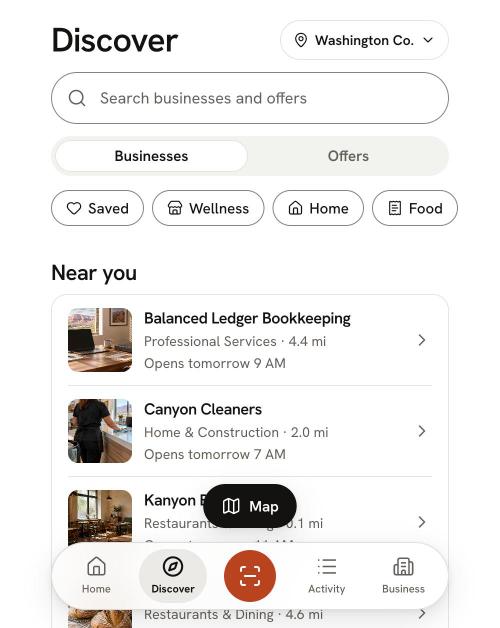
Then check who offers them. Members find what to spend on in Discover, on the map and through suggestions in the app.
4. Spend credits on bills you'd pay in cash anyway
This is where the cash stays in the business. The goal isn't to buy extra things because you have credits. It's to cover expenses that were coming anyway, so the cash you'd have spent on them stays put.
You don't have to buy from the business that bought from you. Earned credits roll forward month to month, so you can spend them when the need comes up. How credits work has the details.
Worked example 1: a lawn and landscape crew
Fictional and illustrative, not a promise of results.
A two-person lawn and landscape company sees its route thin out for a few months each year. Looking at last year, it finds about four open crew days a month in that stretch.
- What it lists: "Yard cleanup and pruning, one crew day" at its normal cash price of 600 credits. It turns trade on only for that listing.
- What it earns: If members book three of those open days in a month, that's 1,800 credits.
- What's on its want list: truck maintenance, yard signs and a bookkeeper for year-end.
- What it spends: 700 credits on brake work for the truck, 300 on a batch of yard signs, and it keeps the rest for bookkeeping in January.
The crew was going to be paid for those days either way. Now the days earned credits that covered bills the business would have paid in cash.
More ideas for this kind of business are on the home services page.
Worked example 2: a massage studio
Fictional and illustrative, not a promise of results.
A small massage studio is full on weekends and evenings but has empty weekday mornings, especially in its slow months.
- What it lists: "Weekday morning massage, 60 minutes" at its regular 90 credits, with trade turned on only for mornings.
- What it earns: Eight member bookings in a month comes to 720 credits.
- What's on its want list: printed gift cards and menus, a website update, and lunch for the team.
- What it spends: 250 credits on printing, 300 on website work, and 150 on a team lunch, with the rest rolling forward.
Evening and weekend clients don't see any change. The mornings that used to sit empty now cover part of the marketing budget.
More ideas are on the health and wellness page.
Keep in mind
- Trade income is taxable. The IRS treats income from trade like cash income, generally in the year you earn it, so you may owe tax in cash on income you earned in credits. Factor that into how much you sell for credits in a given year. Read taxes on trade and talk to your CPA.
- Your plan covers a monthly amount of trade. If a busy month goes past it, the trade still goes through and your plan moves up to the next one on its own.
- What you can buy depends on members near you. Check your want list against what's on offer before you plan around it.
Start before the slow stretch
The best time to set this up is a few weeks before your slow season: listings live, want list filled in, and your Get paid code ready. Then the open days have somewhere to go.
Trade with businesses near you.
Every new member starts with 100 welcome credits to spend with any member. It’s a gift, not a loan, so you never owe it back.