What is a business barter exchange, and what does it cost?
How a local trade network works, what members pay, and how it compares with paying cash.


A business barter exchange is an organization that lets member businesses buy and sell with each other without cash. Members sell their goods or services to other members, earn credits, and spend those credits with any other member. The exchange keeps the records.
The IRS puts it plainly: a barter exchange is an organization whose members contract with each other, or with the exchange, to exchange property or services.
You'll also see the same idea called a barter network, a trade exchange or a trade network. The names overlap. What matters is how it works and what it costs you, so this guide covers both.
How a business barter exchange works
Old-fashioned barter is a direct swap: a plumber fixes a dentist's pipes, the dentist cleans the plumber's teeth. It works only when two businesses each want what the other sells, at the same time, at the same value. That rarely lines up.
An exchange breaks the swap into two separate trades:
- 1You sell to a member. A landscaper does a yard cleanup for a dental office. The landscaper earns credits instead of cash.
- 2You spend with any other member. The landscaper spends those credits at a member restaurant for a staff dinner. The dentist never had to need landscaping, and the restaurant never had to need dental work.
Behind that, the exchange does three jobs:
- Keeps the ledger. It records every trade and keeps a credit balance for each member business.
- Helps members find each other. A directory, a map, a broker or an app, depending on the exchange.
- Handles year-end reporting. Barter exchanges are required to file Form 1099-B for members' trades unless an exception applies.
The reason businesses join is open capacity: an empty appointment slot, a crew with a gap in the schedule, inventory that isn't moving. Selling that capacity to members turns it into credits you can spend on things you'd otherwise pay cash for. For the full walkthrough, read what is a trade network.
Step-by-step guideWhat is a trade network?How local businesses trade without cash, and what it costs.What a barter exchange costs: the common fee models
Exchanges don't all charge the same way, and the headline price is rarely the whole story. Most costs fall into a few buckets.
Per-trade fees
Many exchanges charge a percentage on each transaction. Ask three things about it:
- Who pays it? The seller, the buyer, or both.
- What is it paid in? Cash or credits. A fee paid in cash costs you real money even when the sale itself was in credits.
- When is it charged? At each trade, or added up and billed monthly.
Per-trade fees grow with your activity. The more you trade, the more you pay.
Membership fees
Most exchanges also charge a recurring membership fee, monthly or yearly. Some charge it on top of per-trade fees. Others charge only the membership.
Sign-up costs and other charges
Ask whether there's a one-time fee to join, and whether anything else is billed separately: account maintenance, statements, listings or support. Get the full list in writing.
Flat membership with no per-trade fees
Some exchanges charge one recurring price and nothing per trade. Your cost is the same whether you trade a little or a lot, which makes it easy to budget.
How to add up the real cost
Put the fees side by side for a full year of the trading you expect to do.
| Cost | What to ask | How to estimate a year |
|---|---|---|
| Membership | How much, how often, any annual increase? | Monthly fee x 12 |
| Fees when you sell | What percentage, paid in cash or credits? | Expected yearly trade sales x the percentage |
| Fees when you buy | Is there a fee on purchases too? | Expected yearly trade purchases x the percentage |
| Sign-up | Is there a one-time fee to join? | Add once |
| Other charges | Anything billed separately? | Add each one |
A quick way to see how per-trade fees add up: every 1% charged on 10,000 credits of yearly sales is a fee of 100, in dollars or credits depending on how the exchange bills it. If there's a fee on purchases too, count your purchases the same way.
Then compare that total with what the exchange is likely to bring you: the open capacity you'll fill, and the cash expenses you'll be able to cover with credits instead.
Questions to ask before you join any exchange
Fees are only half of it. An exchange is worth joining only if you can actually spend your credits on things your business needs.
- 1Who's in it near me? Ask what kinds of businesses are in your area, not just the total. Credits earned with no one to spend them with aren't useful.
- 2Which categories are missing? If you can't buy what you already pay cash for, your credits will sit.
- 3What's every fee, in writing? Membership, per-trade fees, sign-up, and anything else.
- 4Can a business take credits from my account, or do I approve every payment?
- 5When do credits post to the seller, and what happens if a trade goes wrong?
- 6Do I choose which products and services take trade? You should be able to keep cash customers as they are and pause trade when you're busy.
- 7How do I see my balance and history? Statements, an app, or a phone call.
- 8Will I get a Form 1099-B, and what tax information will you need from me?
- 9What happens to my credit balance if I leave? Read the member agreement before you sign.
How Red Rock Trade differs
Red Rock Trade is a local business trade network for St. George, Washington County and Iron County, Utah. Here's how it answers those questions.
- No transaction fees. One monthly price for your plan, with plans from $59 a month. Buying and selling with credits never adds a cash fee.
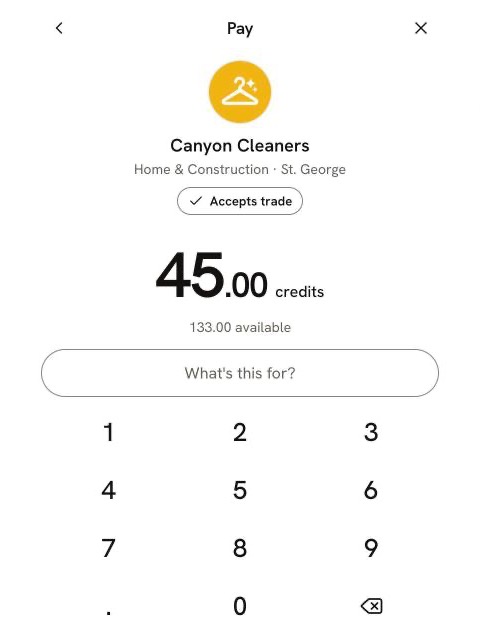
- The buyer approves every payment. The buyer scans your code and confirms. A business can never pull credits from you.
- Credits post when the buyer confirms, or on their own after a set number of days. If something goes wrong, a problem can be reported within 30 days.
- You choose which offers take trade, and when. Cash customers stay exactly as they are, and one switch pauses new trade customers anytime.
- One credit is $1 of purchasing power with members. Credits are spent only inside the network and can't be exchanged for cash. Earned credits roll forward month to month.
- Records and reporting in the app. Balance, activity, monthly statements, and a Form 1099-B for each business after year end.
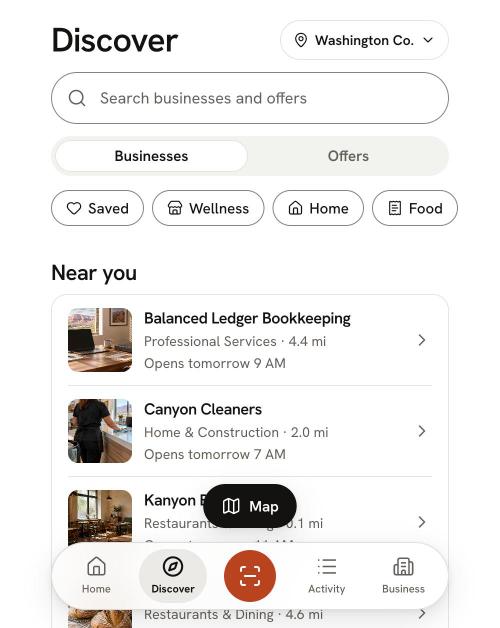
Members find each other in Discover, on the map and through suggestions in the app. See the kinds of offers on trade, or read how credits work.
Frequently asked questions
Yes. Businesses in the United States trade goods and services through organized exchanges, and the IRS has reporting rules for them. That's why an exchange keeps a record of every trade and reports each member's trade sales for the year.
Yes. The IRS treats income from trade like cash income, generally in the year you earn it. Trade exchanges report each member's trade sales for the year on Form 1099-B. Read taxes on trade for the plain-English version, and talk to your CPA about your situation.
One credit is $1 of purchasing power with members. A $200 service costs 200 credits. Credits are spent only inside the network and can't be exchanged for cash.
No. You earn credits from one member and spend them with any other member. That's the main difference between an exchange and a direct swap.
The network is the group of member businesses that trade with each other. The exchange is the operator that records those trades and keeps each member's balance. People often use the terms for the same thing.
Sources: All checked October 3, 2026.
- IRS, Topic no. 420, Bartering income: definition of bartering and a barter exchange; barter exchanges file Form 1099-B for all transactions unless an exception applies. https://www.irs.gov/taxtopics/tc420
- Red Rock Trade facts (fees, plans, how payments post, credit value, area): redrocktrade.co home page, /how-credits-work, /what-is-a-trade-network and /taxes-on-trade as published on October 3, 2026.
Trade with businesses near you.
Every new member starts with 100 welcome credits to spend with any member. It’s a gift, not a loan, so you never owe it back.